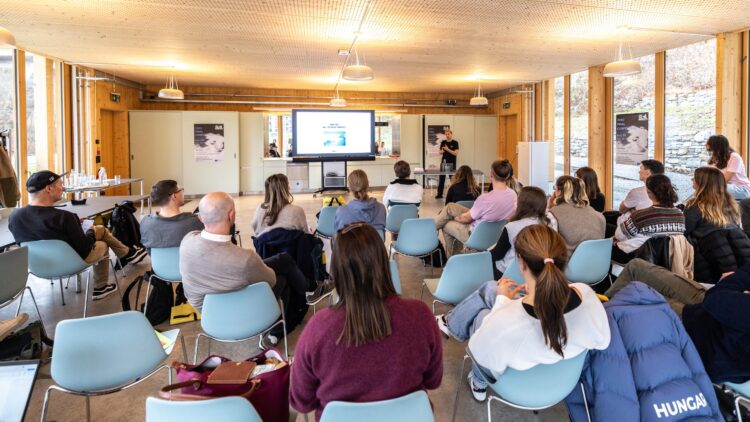
After three years of dedicated work, the Erasmus+ ZERO Project is approaching its conclusion. One of its final milestones was the Final Conference, hosted and organized by Swiss-Ski, one of the 11 project partners. All partners gathered in Bern on November 25, close to Swiss-Ski’s headquarters, for the last in-person meeting of the project.
ZERO’s main vision: The ZERO Project develops innovative grassroots snowboarding practices to increase accessibility and participation of young people in sport, while empowering them to take climate action and move toward “zero emission rides.”
Ultimately, it is about empowering the next generation of riders and turning them into climate advocates.
The conference opened with remarks from Denis Giger, WSF Vice President Youth Development, followed by a welcome from Nikos Karpathakis, Head of Freestyle Events at Swiss-Ski. The floor was then given to Elias Elhardt, one of Germany’s most renowned freeriders, a filmmaker, and an environmental activist. He delivered an inspiring keynote, describing his journey from a young snowboard enthusiast to a world-traveling professional; up to the point where he began questioning it all in order to stay true to his values.

Afterwards, participants took a deep dive into the project. The partners presented key milestones from the past three years, major findings and learnings, final deliverables including educational tools, as well as the challenges encountered along the way.
Gillian Rosh from POW Europe, who hosted the afternoon, gave a detailed introduction to the ZERO Climate Card Game, a deliverable that all partners are particularly excited about.
The program continued with a panel discussion titled “Rethinking Access, Education & Climate Action in Youth Snowboarding”, featuring Christine Busch (CIPRA), Pedro Flavio (FDI Portugal), Chloe Jordan (ENGSO Youth), and Fabienne Dirksen-Reuteler (Swiss-Ski). The discussion addressed a wide range of topics relevant to the snowboarding community and sparked numerous questions from participants. This concluded the afternoon program and the final presentation of the ZERO Project.
