White Paper – Host Actors and Human Rights Due Diligence in the Sports Context
Mega Sporting Events
Details
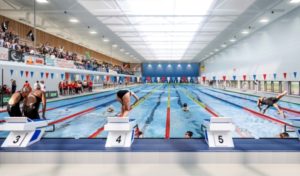
THE new sport & leisure park in Winchester is set to become one of the greenest buildings in the south of England after reaching its latest […]
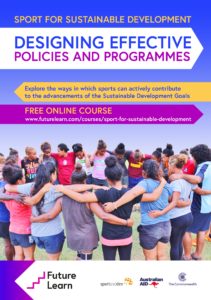
A new, freely available online course launched this month will help individuals and organisations harness the potential of sport in their work towards sustainable […]





A total of 11 White Papers have been produced, clustered into four themes referring to key stakeholder groups. These White Papers aim to present the latest thinking, practice, and debate in relation to key human rights issues involved in the planning, construction, delivery, and legacy of MSEs. Each paper also considers the case for, and potential role of, an independent centre of expertise on MSEs and human rights.
Based on a case study from the Commonwealth Games, this paper explores the human rights duties and responsibilities of mega-sporting event (MSE) ‘Hosts’, defined as the event organising committee and their local and national government counterparts.
It reviews frameworks including UN Guiding Principles on Business and Human Rights (UN Guiding Principles) and Children’s Rights and Business Principles as appropriate roadmaps for implementation by the state and private sector actors engaged in MSE delivery and legacy realisation.
It highlights an emerging area of good practice using a case study from the Commonwealth Sports Movement, providing an overview of the steps taken to date, future plans, and lessons learned so far. Whilst at an early stage, it provides a potential direction of travel for other international federations thinking of undertaking a similar journey to integrate human rights considerations in event hosting.
It concludes by reflecting on what this case study implies for an initiative for collective action, and how the initiative with the Commonwealth Sports Movement can provide valuable lessons to inform the development of more universal roles and functions.
It concludes by focusing on the changing support requirements the Commonwealth Sports Movement is likely to need over time as buy-in and capacity in relation to human rights are built.
The global COVID-19 pandemic has changed the way in which the world operates – at a personal, business, governmental, and inter-governmental level. As the focus shifts to how we rebuild, Climate Week NYC 2020 will explore what lessons we can learn in our pursuit of a net-zero future that embraces a just transition and leaves no one behind.
We must rebuild the global economy for us all – people and planet – as we begin to recover. And we must halve global emissions by the end of this decade.
COP26 has been postponed and the upcoming U.S. election will determine the approach of the world’s largest economy to climate change for the next four years and beyond. This is our opportunity to put people at the heart of climate action.
With this, Climate Week NYC has never been more important and our “For New York, For The World” approach has never been more timely. We must have crucial conversations and do the hard work now to shape the coming years, even if much of it cannot be in person. As one of the few international climate events now taking place this year, hosted in association with the United Nations and the City of New York, all eyes will be on Climate Week NYC as we step up to the challenge to build a better future.

The science is clear.
What were once suppositions are now irrefutable facts.
Human activity has had an enormous negative impact on the Earth to the point that its regenerative capacities are overshot, threatening ecosystems and lives.
Like any other, the sports’ industry we belong to must share responsibility. It is our duty to minimise likely negative impacts and use our incredible potential to reach the masses and bring about positive change that can still make a difference.
This document is an invitation to our event organiser partners to engage in the journey of social, economic and environmental sustainability within and through the delivery of their event.
Some are already engaged, either on a voluntary basis or due to local legislation, and others have not yet started. Regardless of where you are on this journey, this
document offers a non-exhaustive list of actions to help keep you moving into the direction of sustainability.
It will also serve as a framework for a World Triathlon Sustainability certification system, which will recognise the commitments of Local Organising Committees (LOCs) to minimise their footprint.

The World Flying Disc Federation (WFDF) is proud to announce that it has joined the UNFCCC’s Sports for Climate Action initiative as a signatory to […]
The purpose of the Global Dialogue Forum was to discuss current and emerging issues related to the promotion of decent work in the world of sport, with the aim of adopting points of consensus, including recommendations for future action by the International Labour Organization and its Members.

Touchline is an international communications agency specialising in sustainability and sport. For more than two decades we’ve helped leading sports organisations engage their key stakeholders by telling their most impactful stories, delivering multilingual, multi-platform content and reports. We work for the IOC, FIFA, UEFA, FIBA, World Rugby and the ICC, among others. Through our independent platform, The Sustainability Report, we provide economic, social and environmental intelligence for the sports industry. Touchline is a certified carbon neutral organisation.

Enikő Biró and Boglárka Feleki were a key part of the 2019 Teqball World Championships, not only as referees but as an inspiration to […]

Whilst we’re a sport known for our commitment to counteract climate change, we have ambitions to go further, and so do our teams – […]