Sport Sustainability : Impact Assessment-Economics
SandSI, AISTS ,PI, IOC, SportAccord
Details

This module is part of a 12 clips guide created by SportAccord, AISTS, PI, and IOC, to help us understand sustainability as a whole, and look at what it means. Economic Impact Assessment. Why measure, what it is, and how to measure it. (Video 10/12)

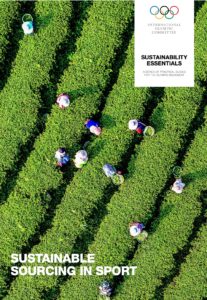
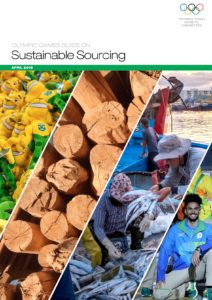
This Guide is part of the "Sustainability Essentials" series developped by the IOC. It is intended to help organisations within the Olympic Movement and the wider sports sector to adopt more sustainable sourcing practices. The choices your organisation makes in the sourcing of goods and services will be fundamental to how you address sustainability as a whole. This is because most of the direct and indirect impacts you have on the environment, people, communities and businesses will stem from how you spend your money. Every item or project ultimately has a price and has to be paid for. How you decide which goods and services you want is ultimately under your control.
All IOC support services and material are shaped by the IOC’s “Olympic Agenda 2020” and, following the recommendations of Olympic Agenda 2020, the “New Norm”. The New Norm consists of 118 practical measures aimed at reducing the cost and complexity of the Olympic and Paralympic Games delivery model and covers the entire lifecycle of a Games edition from candidature to legacy realisation.

This is the introductory guide to the "Sustainability Essentials” series developed by the IOC. IOCaim here is to provide a general understanding of sustainability: what it means, why it is important, how it relates to sport and what a sport organisation can do to be part of this critical endeavour. IOC have compiled this general overview of sustainability as it is essential for National Olympic Committees (NOCs) and International Sports Federations (IFs) – indeed any sports organisation – to have a basic understanding of how sustainability is relevant to sport, and how to go about developing an effective sustainability programme that also leaves lasting legacies.




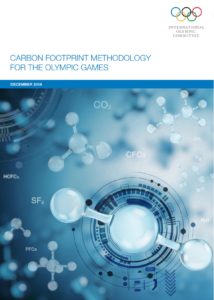
Since the mid-2000s it has become standard practice for Olympic Committee of the Olympic and Paralympic Games (OCOGs) to measure the carbon footprint of their respective Olympic and Paralympic Games projects. However, the methodologies used have been inconsistent, which lessens the transfer of knowledge potential from one Games to another, as well as causing successive OCOGs to start from scratch. This Guide has been developed to assist and facilitate OCOGs in addressing the measuring of greenhouse gas emissions with a consistent methodology and to shorten inevitable learning curve in this field.

This report highlights the demand side of the sport tourism market, investigating the behavioral profile of the participants of an international fencing tournament. It identifies and discusses issues regarding the role of sports organizations and tourism agencies in cities hosting such events to increase the sustainable tourism potential of small-scale sports events in the future.

The SSET is a project initiated by the Vancouver Organizing Committee for the 2010 Olympic and Paralympic Winter Games (VANOC) and the International Academy of Sports Science and Technology (AISTS) in Lausanne. It is currently being developed with the assistance of the International Olympic Committee (IOC), European Athletics and other partners from the world of sport.
The United Nations Environment Programme (UNEP) is the leading global environmental authority that sets the global environmental agenda, promotes the coherent implementation of the environmental dimension of sustainable development within the United Nations system, and serves as an authoritative advocate for the global environment. UNEP mission is to provide leadership and encourage partnership in caring for the environment by inspiring, informing, and enabling nations and peoples to improve their quality of life without compromising that of future generations.

The IFF has been carrying out sustainability projects in the past, the biggest success being the ECO-Compass label for the Women’s World Floorball Championships […]
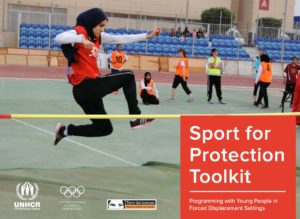
This toolkit represents the next step in an ongoing collaboration that aims to better understand the role that sport can play in the protection and well-being of refugee and internally displaced young people. It builds on more than 20 years of work between UNHCR and the International Olympic Committee to bring sport to some of the world’s most disadvantaged young people. In September 2017, the IOC, supported closely by UNHCR, launched the Olympic Refuge Foundation. The goal is to harness the power of sport to strengthen the protection, development and empowerment environments for vulnerable children and youth.