
Supported by the International Powerboating Union (UIM), the fifth edition of the Monaco Solar & Energy Boat Challenge unveiled some of the latest clean-energy innovations as applied to powerboating in 2018. These innovations encourage the development of renewable energies as a replacement for fossil fuels, one of the biggest drivers of global warming, and show how both powerboating and motorsports could evolve in the future


The activities and interactions between the Swiss Olympic Association (Swiss Olympic) and its stakeholders are guided by the Olympic values and its Code of Ethics, which states that “mutual relationships between people and the attitude towards nature shall be ‘respectful’.” Swiss Olympic encourages this behaviour in sport and integrates it into its procurement activities according to the following principles: product-specific requirements with regard to social and ecological standards; stakeholder consultation; transparency; and transition time for long-standing partnerships.
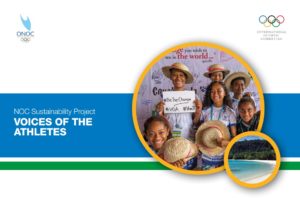
The Voices of the Athletes (VOA) programme is an initiative co-created by the Oceania National Olympic Committees (ONOC) Athletes’ Commission, with the aim of reaching out to athletes to promote and reinforce Olympic values and the spirit of sport. VOA’s core messages are: Be a Leader; Play True; Play Fair; and Go Green.

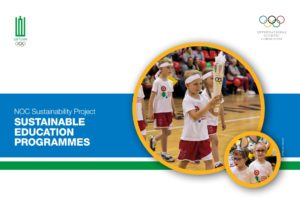
One of the core strategic goals of the National Olympic Committee of Lithuania (LTOK) is to disseminate Olympic values and achieve social development through sport. In order to do this, it implements Olympic Education Programmes (OEPs) throughout the national education system that follow a logic model based on a four-stage framework: needs assessment, design, implementation and evaluation. Across all of the education programmes – from the development of physical activity to Olympic values education – the OEPs share the challenge of measuring their results. Furthermore, securing funding and a continued interest from society and stakeholders depends mainly on the quality of the programme and the capacity to demonstrate effective results.
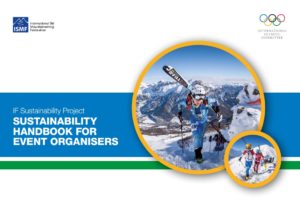
Recognising the capacity and responsibility of sport to manage issues relating to environmental sustainability, and following the Olympic Movement’s Agenda 21 recommendations, the International Ski Mountaineering Federation (ISMF) issued a mandatory sustainability handbook for its Local Organising Committees (LOCs), which between them organise six World Cups and one World/Continental Championship every year. Presented to all LOCs in 2017 and tested and successfully implemented by the Andorran National Federation at the Font Blanca Andorra World Cup event in 2018, the objective of the handbook is to protect the natural environment where ski mountaineering (skimo) competitions are held and to establish a clear and systematic framework that ensures sustainability around three key areas: Leave no trace; Reduce global impacts; and Be the change.

Marine litter is a global issue that carries multifaceted consequences, with poor waste management being the main reason for litter finding its way to our coasts and oceans. It is imperative to raise global awareness of this problem and take measures to address shortcomings in waste management. The Federated States of Micronesia National Olympic Committee (FSMNOC) implemented the Love Your Coast (LYC) project in December 2017 to address this issue through coastal clean-ups and practical educational training on marine litter and coastal recovery.

In 2016, the Fédération Internationale de Football Association (FIFA) joined the United Nations (UN) Climate Change Secretariat’s Climate Neutral Now initiative, pledging to achieve greenhouse gas emission neutrality by the mid-21st century. Climate Neutral Now brings together organisations committed to measuring, reducing and reporting greenhouse gas (GHG) emissions – the leading cause of global warming – and compensating unavoidable emissions with UN Certified Emission Reductions. Joining Climate Neutral Now contributes to the central objective of the Paris Agreement of limiting global temperature rise to less than 2 degrees celsius, and to the mitigation of climate change’s gravest effects.

The Fédération Internationale de l’Automobile (FIA)’s annual FIA Smart Cities Award highlights innovative mobility projects implemented by cities that host the rounds of the fully electric ABB FIA Formula E Championship. The award was first given in 2017 and creates a sharing platform for expertise in innovative urban mobility solutions

To help motorsport stakeholders (e.g. National Sporting Authorities [ASNs], circuits and teams) measure and improve their environmental performance, the Fédération Internationale de l’Automobile (FIA) has developed and implemented an Environmental Accreditation Programme. This three-level programme introduces an environmental management framework for motorsport drawn from multiple international standards, such as ISO14001. Providing clear guidelines on the sustainable management of motorsports events, the FIA’s programme has been tailored to enable all stakeholders to apply the right level of environmental assessment according to their activities, needs, and their level of maturity.

To more firmly anchor biodiversity in sport, raise awareness and establish closer links between sports and nature conservation organisations, the German Olympic Sports Confederation (DOSB) launched the Sport Moves – Experience Biodiversity project, supported by the Federal Ministry for the Environment, Nature Conservation and Nuclear Safety (BMU).