World Archery excellence centre
IOC / World Archery
Details

When planning its new World Archery Excellence Centre in Lausanne, Switzerland, World Archery resolved to create a building that was sustainable and had positive impacts on both the sport of archery and the local community. Through an agreement with the city of Lausanne, World Archery received the land in exchange for providing electricity to the city through its solar panels





The International Fistball Association (IFA) and the World Flying Disc Federation (WFDF) aim to place sustainable development at the core of their organisations to create positive economic, social and environmental impacts through their operations and events. The limited resources of both International Federations (IFs) encouraged them to collaborate, sharing information and resources on different topics including sustainability. As a result, they have been able to provide a higher level of support to their National Federations (NFs) and Local Organising Committees (LOCs).
In May 2017, five International Federations (IFs) and the IOC created a working group to tackle the ongoing issue of pollution in natural water bodies, in an effort to increase the safety of athletes and promote legacy projects in host cities for water sports, recreation and the environment.

Environmental pollution by lead is a global issue. No known level of lead exposure is considered safe, and the toxin is one of the most deadly on the planet. Its common use has resulted in extensive environmental contamination and widespread public health problems, harming young children in particular. Before 2011, Modern Pentathlon athletes used approximately 25 tonnes of lead pellets per year globally, some of which inevitably ended up in the environment. The International Union of Modern Pentathlon (UIPM) took this into consideration and, wanting also to improve safety and inclusivity for its athletes, changed from lead to laser pistols in 2011. Laser equipment is safer to use, has minimal security restrictions and is available to children, allowing UIPM events to target new audiences and be conducted in different locations, such as city centres, public parks, clubs and schools. Many countries have restrictions for minors when it comes to shooting and possession of sport pistols, but this is not the case for laser equipment. Since the introduction of laser pistols, the number of athletes has doubled and the UIPM has introduced new disciplines, enabling the engagement of youth, and inspiring future athletes. A new event, Laser-Run City Tour, reached almost 60 cities and 15,000 participants of all ages in 2017.
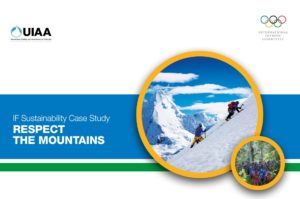
Mountains offer a place for everyone to be inspired, play and find adventure. They provide essential fresh water to billions of people worldwide and are home to a rich array of wildlife and unique plants. One hundred million tourists visit the European Alps alone each year – and every tourist leaves a footprint, often in the form of waste. Action is required to remove this waste and educate mountaineers about respecting the environment.
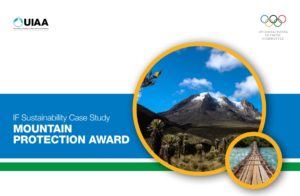
The rich yet fragile nature of the mountain ecosystem means it is imperative that we manage human induced impacts, to ensure both the sustainability of these regions and the future of International Climbing and Mountaineering Federation (UIAA) sports such as mountaineering, ice climbing and rock climbing.
Over recent decades, mountain regions have seen a substantial increase in tourism and sports activities, which has resulted in the over-exploitation of natural resources, increases in pollution and waste, changes in land use and disturbances to flora and fauna.
The UIAA’s Mountain Protection Award (MPA) has been designed to promote responsible mountain tourism practices and reward outstanding initiatives from mountain stakeholders.
Click here to watch the promotional clip: https://youtu.be/4wVbM0yfnNo
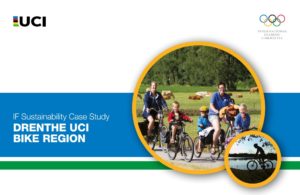
In 2016, Drenthe in the Netherlands became one of the three first cities and regions to be awarded the “Union Cycliste Internationale (UCI) Bike City/Region” label. Awarded for a four-year period, the label recognises cities and/or regions that both host UCI cycling events and demonstrate an outstanding commitment to cycling for all. Covering 2,500km2 and with a population of around 500,000, Drenthe promotes cycling as a way for its residents to achieve better health and well-being. Currently, 29 per cent of all trips are made by bicycle, though the region hopes to raise bike use by a further 20 per cent by 2020
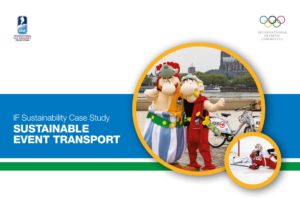
At the 2017 IIHF Ice Hockey World Championship (WM) in Germany, the International Ice Hockey Federation (IIHF), the Local Organising Committee (LOC), the city of Cologne and its public transport network, KVB, and local bike rental company Nextbike, teamed up to provide sustainable transport to all accredited participants and spectators. Participants could use WM-branded bicycles free of charge for the duration of the Championship. The benefits of cycling are well known. According to the UCI’s Cycling for All Manifesto: “Cycling can help tackle some of the pressing challenges facing humanity. Reduced air pollution, lowered traffic congestion, and improved public health are among the many benefits that greater everyday cycling around the world offers, accessible to all, rich or poor.”

As detailed in its Sustainability Statement, endorsed in 2012 by over 150 golf associations around the world, the International Golf Federation (IGF) regards safeguarding the environment as a top priority. Golf courses are often located in ecologically rich landscapes, and their construction is increasingly under pressure from land and water scarcity and environmental regulations. For this reason, the IGF and many of its members and partners have been working with the sustainability solutions of GEO Foundation and the United States Golf Association (USGA) “Green Section” to integrate sustainability into new golf facilities and major championships.
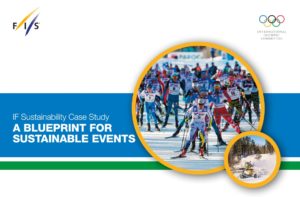
Climate change, natural resource scarcity and other sustainability concerns are threats to winter sports such as skiing. This is why the International Ski Federation (FIS) collaborated with the Lahti 2017 Nordic World Ski Championships Local Organising Committee (LOC) to make sustainability a cornerstone of the event. The slogan “Not for 10 days but for the next 100 years” accompanied all the LOC activities, raising awareness around the importance of making sustainability integral to championships. FIS guidelines require the National Federation, the host city and the LOC to respect the environment and promote its protection. With the aim of providing a sustainability blueprint for future FIS events, the Lahti LOC collaborated with organisations such as the Sitra Innovation Fund, which provided sustainability awareness workshops for partners and sponsors; EcoCompass, which helped deliver environmental certification; Stora Enso, a renewable materials provider; and Globe Hope, an eco-friendly design company