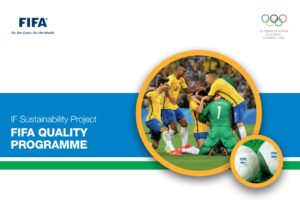
Social responsibility is a key issue for FIFA, which believes that football can bring about positive social change. As part of this responsibility, FIFA has implemented the FIFA Quality Programme to protect the interests of its stakeholders and to ensure that correct measures were being taken in the production of football equipment, surfaces, technology and services used for the sport. The FIFA Quality Programme has been built on in depth studies, surveys and analyses of players’ needs, and also encompasses aspects of safety, performance, durability, quality assurance and playing comfort.

Pioneering audio-descriptive commentary was offered in Portuguese at 26 of the 64 matches during the 2014 FIFA World Cup Brazil™, describing the atmosphere in the stadium and the action on the pitch. FIFA appointed the Centre for Access to Football in Europe (CAFE) as consultants to deliver and manage the commentary at the four host stadiums in Belo Horizonte, Brasilia, Rio de Janeiro and São Paulo.
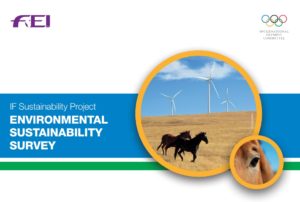
The International Equestrian Federation (FEI) established a sustainability programme in 2013, born from its desire to make a serious contribution towards conserving the sound environment necessary for the practice and continuity of equestrian sport. The sustainability programme encompassed various initiatives to support event organisers reduce negative environmental impacts and create a positive legacy. As part of the process, the FEI commissioned a survey to further understand the status of environmental sustainability and ascertain future needs among event organisers.


To prepare for council meetings (on average, three per year) and the eight standing committee meetings attached to each one, the Badminton World Federation (BWF) staff had to compile folders containing a large volume of information for each council member. The 26 council members and four BWF staff members who attended council meetings each received a folder containing approximately 500 sheets of paper, which equates to approximately 15,000 sheets of paper for each week of meetings. It took BWF staff almost two full days to prepare the folders, which then had to be shipped to the meeting location – often a costly process. The folders were heavy and caused security concerns, as members were not always able to dispose of them appropriately They also created unnecessary waste: some folders had to be shredded because members did not want to take them home

More than ten years ago, the International Boxing Federation (AIBA) established a redistribution policy for the sport equipment it acquires for its annual major events. For each event, AIBA secures sponsorship partners that provide the necessary equipment, such as boxing rings, boxing gloves, head guards, pads and punching bags. Within the framework of the sponsor agreement is the understanding that all equipment used for the event will be donated to the host National Federation (NF). The NF then has the responsibility of redistributing the equipment to local clubs and development centres in order to help athletes who require proper equipment for training and competition.

In the words of the United Nations: “While the world has achieved progress towards gender equality and women’s empowerment, women and girls continue to suffer discrimination in every part of the world. ”Building on its ongoing efforts to promote and respect gender equality, World Taekwondo (WT) has developed and implemented a strategy designed to guarantee that half of all referees officiating at WT-sanctioned events are women – representing a substantial step towards gender equality.


World Sailing has placed sustainability at the heart of the organisation. Following the publication in November 2016 of the first World Sailing Sustainability Strategy (2017-2030), which evolved through internal research and a stakeholder consultation process, World Sailing hired a dedicated sustainability expert in June 2017.
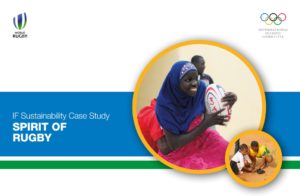
World Rugby recognises the power of sport as a catalyst for social development and a tool to improve people’s lives. To harness this spirit and engage with the wider rugby family, World Rugby developed “Spirit of Rugby” in 2016. As part of this programme, World Rugby invited organisations to submit proposals for joint sustainability-related projects, providing them with an opportunity to partner with the International Federation (IF) and leverage the “Spirit of Rugby” initiative’s visibility and energy.

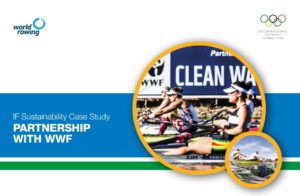
Fresh water accounts for less than one per cent of the world’s water bodies, and one billion people currently have no access to safe drinking water. Recognising the vital global importance of clean fresh water, the World Rowing Federation (FISA) and WWF joined forces in 2011 to address this key issue in sustainable development, a crucial element for the sport of rowing and the well-being of its athletes. World Rowing believes it has a responsibility to not only apply environmentally sustainable practices, but also to take a lead in this global issue. Through the partnership, World Rowing has been able to educate rowing communities and the public about the value of clean water.

World Archery has cut back on the use of plastic bottles at competitions, reducing waste and saving money. One million plastic bottles are bought around the world every minute – and this number is forecast to jump another 20 per cent by 2021, according to the Guardian/ Euromonitor. This volume of plastic is contributing to an environmental crisis some campaigners predict will be as serious as climate change, posing significant threats to our health, our oceans and our wildlife