A sustainability strategy for hockey
FIH
Details

The Hungarian Olympic Committee (HOC) is one of the mentee-NOCs that participated in the three-year mentorship programme As Sustainable As Possible (ASAP). Inspired by […]

As an Olympic International Federation, the Fédération Internationale de Hockey (FIH) is following the UN and the IOC’s leadership in recognising sport as an important enabler of sustainable development and peace.
As part of its Corporate Responsibility and good governance, FIH has released a new Sustainability Strategy in 2022, with the aim of encouraging the global hockey community to contribute positively to the FIH’s development goals.


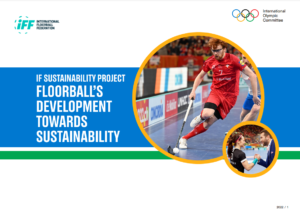
The general concerns around climate change and the desire to take responsibility have sparked stronger development of sustainability initiatives within floorball, and resulted in the International Floorball Federation (IFF) signing the UN Sports for Climate Action Framework (S4CA) in 2019. That same year, the IFF started preparing its Strategy for 2021-2032 – “Strengthening the Foundations” – which includes sustainability as one of the main focus areas.

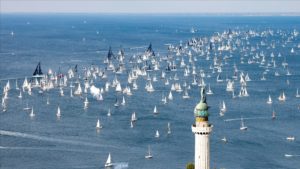
World Sailing, the sport’s world governing body, has joined forces with Barcolana, the largest sailing race in the world with tens of thousands of […]

World Sailing will mark World Ocean Day by calling on the federation’s global community of sailors to support the One Blue Voice petition for a Universal Declaration of Ocean Rights, which will […]

The Swiss advertising authority has decided that FIFA is guilty of misleading consumers by declaring that the World Cup in Qatar was “carbon neutral”. […]

Plastics in all their forms – from packaging waste to microplastics – are polluting our oceans, rivers, lands and drinking water. The theme of […]
The International Monohull Open Class Association (IMOCA) is the governing body of the IMOCA class. Its main task is to design the class regulations for the ocean racing yachts IMOCA 60 and organising single-handed regattas. It was established in 1991. IMOCA has been a member of World Sailing (governing body of international sailing sport) since 1999.
IMOCA, MarineShift360 and five of the world leading sailmakers (All Purpose, Incidence Sails, North Sails, One Sails & Quantum Sails) have developed the world’s first sail impact evaluation scheme, to assess and address the kgCO2e impact of all sails and grade them. In all, inspiring the sailmaking industry to innovate their technology around impact reduction. This is RISE (Reduced Impact Sail Evaluation).
In 2021, IMOCA learnt that for every 1kg of finished sail there was 6kg of waste produced. It was from here that IMOCA took voluntary action in beginning to reduce this impact
IMOCA called all their major sailmakers (All Purpose, Incidence Sails, North Sails, One Sails, Quantum Sails and most recently Doyle Sails) to action. We analysed a J2 sail from each sailmaker to draw up comparisons via Life Cycle Assessment - this allowed us to see that the three major hotspots in sailmaking were: waste, energy and transport.
In January 2023, IMOCA introduced the first ever Green Sail rule in world sailing. This required every team to include at least one sail in their inventory that had been manufactured under agreed environmental limits. The intention was to clean up these first three sections before tackling the fundamental technology and materials within sail production.
In the first year, overall carbon dioxide emissions were reduced by 30% per kilo of finished sail, waste was reduced by a third per kilo of finished sail and, all air travel was prohibited for Green Sails from sourcing to arrival at the client.
Since the rule came in, over 80, Green Sails have been produced for IMOCA teams.
The International Monohull Open Class Association (IMOCA) is the governing body of the IMOCA class. Its main task is to design the class regulations for the ocean racing yachts IMOCA 60 and organising single-handed regattas. It was established in 1991. IMOCA has been a member of World Sailing (governing body of international sailing sport) since 1999.
Transforming the industry takes time. It also needs a well adapted governance strategy to implement the change and drive it. The IMOCA Class is well positioned to drive change through the industry by adapting its rules with sustainable measures. The Class has boasted the largest comparative life cycle assessment study in sailing over the last three years, leading to an ambitious 60tCO2e reduction scheme on all new IMOCA. The innovative Eco-Score tool developed by IMOCA and the nautical industry is the key device to coordinate, drive and assure the change.
An IMOCA construction produces over 400tCO2e* when constructed, yet our sector** has no reglementation pushing us to decrease our impact.
We therefore decided to put in place our own voluntary limits, which enabled us to regroup a whole industry around this ambition.
To proceed with this, we started in 2021 conducting a three year long comparative study of life cycle assessments (LCA) on 12 IMOCA constructions (the largest single study ever done on offshore racing yachts). This study included over 50 stakeholders, over 100 parts analysed and in seven countries. From here, the interpretation work began in 2023 to unveil the emission hotspots of the IMOCA yachts.
We identified that an IMOCA build had three major impact hotspots:
By delving further into the studies, it was the materials - essentially carbon fibre - that heightened the CO2e emissions.
2023 was a significant turning point for the studies, as the hotspots were identified and the specific stakeholders were outlined to work on the reduction roadmap. This led to the creation of the first impact reduction Eco-Score tool for IMOCA, offshore racing, sailing and sport as a whole.
The first version of the Impact Reduction Rule was introduced in April 2024. It stipulates that, using the Eco-Score reduction tool, all new IMOCA boat builds from 2025-2028 must meet a minimum impact reduction of 60 tonnes of carbon dioxide (CO2) and the other associated Greenhouse gases.
In the future?
The aim is for the Impact Reduction Rule to stay in place and to be made tougher at the start of each four-year cycle. So, in 2028, the Rule will call for a further impact reduction of 60 tonnes or more of carbon dioxide in the boat construction process based on the 2024 baseline.
*IMOCA study framework - hull, deck, mast, boom, foils, keel bulb, keel fin, rudders, moulds
**Our sector is situated between the nautical and the sporting industry. Our IMOCA Class works with over 200 stakeholders to ensure the running of the IMOCA championship including races, boat builds, teams and more.
The ground-breaking collaboration supports the aim of producing the first zero waste to landfill UEFA Finals by 2026 PepsiCo, in partnership with UEFA (Union […]