
Case Studies
Ahead of International Women’s Day, World Rugby has announced an extension of its Women’s Executive Leadership Scholarship programme, following game-changing outcomes in its first two years. An additional 12 new scholarships will be awarded in 2020 with 12 recipients coming from across the globe in Africa, Asia, Oceania, South America, Europe and North America. Originally launched in 2018 as a two-year strategy to accelerate the normalisation of women in key leadership roles on and off the field, the game-changing scholarship programme aligns with World Rugby’s transformational governance reform, which has resulted in women comprising more than a third of the international federation’s 50-strong Council.

Joanna Leigh, BASIS Steering Committee member, wanted put sustainability on the radar for Women's Hockey. Joanna worked to create and implement an environmental policy, and engaged in conversations with a number of stakeholders including sponsors and volunteers


Principality Stadium in Cardiff started its sustainability journey in 2010, and has only progressed since then. Principality stadium has been improving its sustainability outcomes for almost a decade.

The All England Lawn Tennis Club set out to inspire and engage visitors on the subject of the environment.

As a Non-Governmental Organisation (NGO), World Sailing was granted consultative status within the International Maritime Organization (IMO) in 1999, when the IF was known as the International Sailing Federation (ISAF). Through having this status, World Sailing has been able to discuss relevant issues and provide advice during meetings. However, consultative status does not confer voting rights. World Sailing has been represented at IMO meetings by members of the IF’s International Regulations Commission. World Sailing’s position at IMO was particularly felt during the period when the IMO’s Sub-Committee on Bulk Liquids & Gases (BLG) started to develop “Guidelines for the control and management of ship’s biofouling to minimise the transfer of invasive aquatic species”. The guidelines covered all ships within its scope, including small boats.
More than 15 years ago, World Rugby (formerly the International Rugby Board) partnered with SOS Kit Aid, a developing rugby-oriented charity that had been founded by former rugby player John Broadfoot following a visit to Romania in 2000. SOS Kit Aid mission is to recycle rugby kit for the benefit of young people around the world. The organisation seeks to make a positive impact on children’s lives by giving them the chance to participate in sporting activities, while also promoting social inclusion and protecting the environment. Since its first delivery of rugby kits in 2001, SOS Kit Aid has made approximately 500 donations to more than 35 countries, including Moldova, Georgia, Kenya, Swaziland, Ecuador and Fiji.

Following the success of the World Curling Federation's (WCF) New Facility Loan programme, which allows member associations (National Federations; NFs) to apply for loans to build new curling rinks, the WCF decided to create a Green Facility Loan initiative. Designed in a similar manner to the New Facility Loans, Green Facility Loans provide an opportunity for members and clubs within NFs to access funding in order to improve existing facilities with new technologies and equipment that is more sustainable and may help to reduce energy costs.

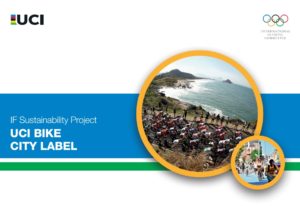
In 2015, the Union Cycliste Internationale (UCI) decided to relaunch the UCI Bike City label, which had been designed to reward bike-friendly cities. The programme, which started ten years ago, was revamped with new criteria to appeal to a wider number of cities. The first new UCI Bike City labels were awarded in October 2016 to Bergen (Norway), Drenthe (the Netherlands) and Limburg-Valkenburg (the Netherlands), and will be valid for four years.
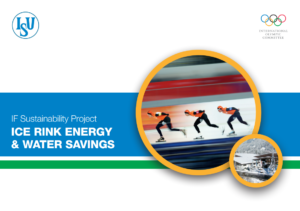
The Eissportzentrum Oberstdorf is the national training centre for figure skating in Germany, supported financially by the German and Bavarian state governments and owned by the community of Oberstdorf. The community and the government sought to implement two new systems to reduce energy costs and conserve water.
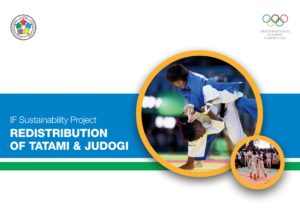
The International Judo Federation (IJF) purchases tatami and judogi when hosting major events. The tatami and judogi are sourced only from manufacturers who have met IJF regulations with regard to such matters as safety, production standards, fire resistance, homogeneity and stiffness. Since 2007, the IJF has institutionalised a redistribution programme of used tatami and judogis, which are allocated based on requests made by member federations.