
The Fédération Internationale de Football Association (FIFA) is touching the lives of millions of people all over the world. Through football competitions and its operations FIFA also generates jobs and interacts with a wide range of organisations. With this global reach and impact comes a heightened responsibility to preserve the inherent dignity and equal rights of each individual affected by FIFA’s activities. FIFA therefore considers respecting human rights both a social responsibility and moral obligation
In March 2017, the International Fencing Federation (FIE) launched “Donate Your Fencing Gear”, a new long-term initiative encouraging fencers to donate their fencing equipment to fencers that may not have access to such materials. Following tests at the Junior & Cadet World Fencing Championships in Plovdiv, Bulgaria, in April 2017, the scheme was fully implemented at the World Fencing Championships in Leipzig, Germany, in July.
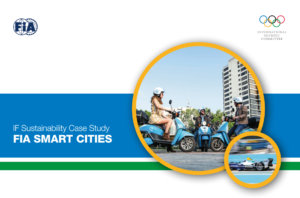
The number of people living in urban areas around the world is expected to grow by around 2.5 billion by 2050. With transport and mobility being two core elements of a liveable city environment, the world urgently needs plans and policies that tackle pollution, congestion and road safety hazards. Supporting the United Nations’ New Urban Agenda, the Fédération Internationale de l’Automobile (FIA) has taken a proactive role in shaping the future of our cities by creating the “FIA Smart Cities” initiative.

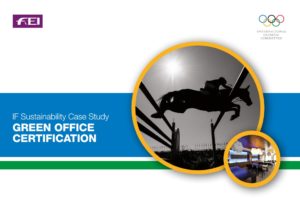
In line with its efforts to respect the environment, the Fédération Equestre Internationale (FEI) decided to renovate its headquarters in accordance with the Swiss Minergie construction standard for energy efficiency. On average, Minergie-compliant buildings consume 25 per cent less energy than conventional buildings. After moving into its headquarters, the FEI chose to go further by aligning its office operations with the sustainable character of its building. In 2017, the FEI started working with recycling specialist Interseroh to receive its Green Office certification, which recognises sustainable office practice in four areas: 1. Ensuring training for and commitment from employees. 2. Executing an optimised bin concept with visual enhancements. 3. Controlling waste processes, and defining responsibilities for bin clearance. 4. Communicating major alterations to the organisation’s waste disposal partner or internal contact. According to Interseroh, 80 percent of typical office waste is disposed of incorrectly and ends up in landfill even though many items could be recycled. Separating recyclable materials such as paper, PET, glass, aluminium, organic waste and coffee capsules optimises their use and also helps lower office costs

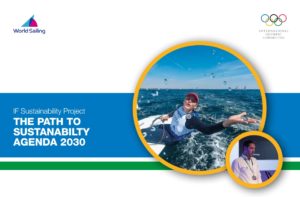
Having successfully launched a sustainability strategy in 2016, World Sailing has since taken further steps towards embracing sustainability at the core of the organisation and the sport. These steps provided a set of objectives and target actions that formalised the intentions of World Sailing to drive sustainability and open up further opportunities. One of the first steps was to set up an independent Sustainability Commission, comprised of eight experts from five countries. Together with relevant staff, they developed a long-term sustainability vision (Sustainability Agenda 2030) and proposed a set of 59 ambitious but achievable sustainability targets



World Rugby has a responsibility to both regulate and inspire and in 2018 published at www.world. rugby/sustainability a framework to guide sustainable actions across rugby in a holistic way. Through collaboration with various rugby and non-rugby stakeholders, the team nature of the sport is reflected in the framework, which demonstrates a role for all including National Federations (NFs), continental associations, players, fans, officials, partners and suppliers. This approach reinforces the importance of a team effort and helps to identify and understand impacts to better manage available and potential resources in a sustainable way.
The World Heritage sites (WHS) are designated by the United Nations Educational, Scientific and Cultural Organization (UNESCO) for their “outstanding universal value”. They represent unique natural and cultural sources of life, and play a vital role for current and future generations. WHS are grouped into three categories: cultural sites, natural sites, and mixed sites that combine cultural and natural value. A total of 229 natural and mixed WHS cover around 2.79 million km2 and provide both freshwater and jobs to 11 million people. They also store 10.5 billion tonnes of carbon, thus adding to the regulation of our climate both locally and globally. Around 50 per cent of all natural WHS are threatened by human activities – including the organisation of sporting events. By acknowledging the negative impact that such events can have on certain sites, the World Rowing Federation (FISA) has implemented a policy to protect natural and mixed WHS with the support of the WWF. World Rowing now assesses any potential impact on the sites of World Rowing- sanctioned events in advance. As part of the bidding process for a World Rowing event, World Rowing and its stakeholders
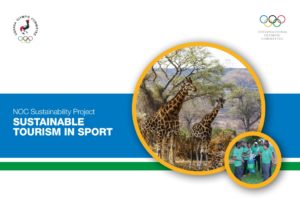
On the understanding that tourism should be consistent with the tenets of sustainable development and that sport has the potential to advocate for it, the Uganda Olympic Committee (UOC) brought together sports, governmental, non-governmental, cultural and private stakeholders to propose measures that could attract sustainable tourism through sport.
Tourism can only be sustainable if the natural assets on which it is based are protected from degradation.
A well managed tourism sector can become a tool for environmental protection, preventing irreversible impacts such as disruption of wildlife, alteration of landscapes and deforestation.
Sustainable tourism is about minimising negative environmental impacts and maximising socio-economic benefits at tourist destinations
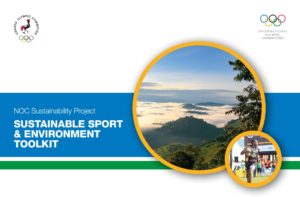
The Uganda Olympic Committee (UOC)’s Sport and Environment Commission has produced a toolkit for national stakeholders and National Federations (NFs) that explains the environmental issues connected to sport, and how to implement appropriate measures. The toolkit is a response to the UOC’s concerns about the negative impact that sport can have on the environment, as well as the impact of a degraded environment on athletes. The toolkit was launched in 2015 and guides the Ugandan sports community – in particular the 23 NFs – to integrate environmental sustainability into sport.
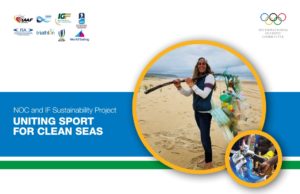
The Clean Seas campaign was launched in February 2017 to increase global awareness of the marine litter issue, and to implement measures that address gaps in waste management. Oceans are one of Earth’s most precious natural resources, covering over 70 per cent of our planet’s surface. They are responsible for producing oxygen, cleaning the air and regulating the weather. Around 80 per cent of litter originates from land-based activities and ends up in our oceans. Littering causes pollution and alters the properties of the water, harming marine wildlife, depleting fish stocks, and impacting global economies.